Showing posts with label Iloilo City. Show all posts

Tuesday, October 13, 2020

PDI Opinion: Iloilo as Wakanda

New commentary in today's Inquirer--website version here. Let me just add that coming home prior to the start of the March lockdown was the best decision ever.

*     *     *     *     *

Iloilo as Wakanda

ILOILO CITY--Perhaps it's time we stopped referring to this city as the Philippine Wakanda. The title, referencing the fictional African utopia integrated into everyday language by the 2018 superhero film "Black Panther," aptly captured how local leadership marshaled its own pandemic response during the first half of the year, when the national government couldn't even get its act together. These days, however, the moniker is being tossed around in various other contexts, a placeholder asserting this idea of the city as an infallible paradise.

One recent instance involved the Iloilo River Esplanade: On Twitter, it was hailed as a paragon of nature-friendly public infrastructure, the antithesis to that brainless dolomite beach reclamation in Manila Bay.

Separately, as authorities grappled with the rise of biking in Metro Manila--and preoccupied themselves with how best to earn from it--netizens swiftly pointed out how Iloilo already provided a model for this "new normal," justifying this claim with images of the eight-lane Diversion Road with its companion 11-kilometer bike lane. (So picturesque is the highway, in fact, that a year ago, pro-Duterte trolls even circulated a photo of it, claiming it was a picture of Davao City.)

A more clear-eyed perspective would celebrate the long-term vision that doubtless informed these projects--boosting the city's "habitability" and its attractiveness to tourists and investors--while also acknowledging their consequential imperfections.

A quick online search, for example, easily reveals how these esplanades, now stretching several kilometers, came at the expense of the original river flora. As late as two years ago, mangroves lining the river were still dying, as the construction work disrupted the tidal flow and water salinity necessary for the plants' survival. (Good news, though: A mangrove-replanting scheme has, from the looks of it, by far succeeded.)

And while anointing the city as the country's "bike capital" may not be totally off-base, at the very least it conveniently ignores, if not altogether erases, the local lived reality--how the past decade's mad rush to rehabilitate (and even "re-rehabilitate") the city roads, in a place with barely the inherent space to accommodate sprawling, simultaneous road works, meant month after month of perennial, time-consuming congestion spilling across districts.

This is not to diminish the achievements of a city whose push for progress has remarkably included green spaces and cultural heritage in the picture. But in the age of virtual information warfare, a nuanced perspective must always prevail, more so in instances touting supposed progress. In other words, facts--and therefore clarity--above all else.

Scholars have long noted the political nature of names: The very act of naming spawns its own power structure, eventually influencing future thought and action. Iloilo itself is no stranger to the politics of nomenclature: Remember back when someone declared it the "most shabulized city" in the country?

The present case is the complete opposite. Now we're dealing with a name connoting invincibility and impenetrability, at such a critical juncture in contemporary history. The danger, then, in ascribing a status of implied superiority to a single place goes beyond mere misrepresentation. It warps public consciousness, birthing instead an idea of the place that's devoid of imperfection and immune to criticism. To go by a tenet of propaganda, repetition is key to creating the reality. Keep upholding this myth of the Ilonggo Wakanda, and soon you'll have anything but. (In this era of right-wing populism, you might even get an army of blind believers to back you up.)

If there's anything the last four years in Philippine politics have taught us, it's that too much belief in something--or someone--eventually blurs the line between fact and fiction, blunting our collective judgment.

Our cities, and our leaders, should not be placed on pedestals. They must always be rendered on a human scale--to be praised where praise is due, and to be held accountable for their every shortcoming. 

For Iloilo, that may mean commending its government for the way it has handled the pandemic these last six months (establishing accessible mass testing, sustaining open lines of communication, nurturing public-private partnership, etc.). But even this commendation should go hand in hand with recognizing that these mechanisms haven't always been perfect or fully effective in curbing the threat of COVID-19.

Such a duality, in the bigger scheme of things, should be enough. Anything more--anything subscribing to ridiculous superlatives, like this perpetration of the Wakandan analogy--is unnecessary, and may even prove damaging in the long run. 

Monday, May 21, 2018

Turning 26

Victoria Peak, December 2017.

When I turned 25 a year ago, it was a different world then. I was coming home to Iloilo after two weeks in Dumaguete as a fellow to the 56th Silliman University National Writers Workshop. For lack of a less cliché sentiment, those were two of the best weeks of the year. I'd submitted my application on a whim, after thinking I wouldn't even make the deadline, already somehow resigned that I'd never be part of the workshop's history. 

I spent a good part of that birthday transiting in the marketplace that was Mactan Airport. There were no direct flights from Dumaguete to Iloilo, and I was determined to be home before evening, so I'd booked the early morning flight to Cebu and boarded the plane hungover from the previous night's farewell festivities. I didn't mind the blur of it all; the mental haze somehow made the day all the more deviant and, thus, exciting. In a week, I'd be in Bicol with two of my best friends from high school; in two more, I'd be in Japan, for the first time, with my mother and brother.

When I turned 26 yesterday, I'd had three hospitalizations within a span of five months--first, for H. pylori gastritis three days before Christmas last year; then for an appendectomy last month, and a readmission after that operation for partial gut obstruction.

I'd spent a good seven months back in Iloilo, eased into a routine so far off from the toxic, patient-filled life of residency training I'd envisioned.  

I'd seen 52 movies since New Year's, aside from a number of TV series, plus a pirated copy of the filmed version of London's National Theater's "Angels in America." I'd read more non-medical books than I could recall reading within a similar length of time (among those books, David Mitchell's "Black Swan Green," Wilfredo Pascual's "Kilometer Zero," Mookie Katigbak-Lacuesta's "Burning Houses").

I'd seen what will probably be the most atrocious production of Jonathan Larson's "Rent" I will ever see in this lifetime, and also a so-so touring production of "The Lion King," the source movie being one of the defining movies of my youth.

I'd gone on a supposedly secret, 24-hour trip to Hong Kong very few people knew about. 

And my father had been gone for just a little over seven months. It's this last bit, I suppose, that's fueling this emotional logorrhea. It's hard to believe it's been that long, but you can do nothing else but believe it, y'know.

Thursday, March 8, 2018

Tres Amigos

From The Star Online.

In high school, pretentious art snob that I was trying to be (some would say precocious, but let's stick to my words), I came across two movies that shookt me to the core at a time when shookt wasn't even sperm and egg. It was the golden age of BluRays and DVDs, and one of my uncles was trying to be Iloilo's next great collector, with his wheeled plastic crates of movies bought from one of those low-key stalls (run by a Chinese immigrant, if this is relevant) inside a legitimate mall. I was consciously trying to make myself "cultured," as if by seeing lots of movies, I'd be one step ahead of everyone else--better, even. And that, I realized years later, wasn't at all an invalid argument, but let's be concerned only with pre-college me, not yet a full inductee into the Church of Theater but so hungry for "class" and "quality" and other words that could wear quotation marks instead of quotation marks wearing them (like how, at the Oscars few days ago, Taraji P. Henson's dress wore her instead of the other way around). At the Silliman workshop last year, a kind of full-circle moment occurred, when my youngest co-fellow asked me, "How do you become cultured?" And we told him it's all a matter of reading and watching and listening to what you can, that being cultured is not something that happens overnight, but what I really wanted to say was, boy, you're so like me at that age, and I'm so proud, this must be how being a father feels like. But back to the movies.

My mom was--still is--my constant movie companion. (Now that I'm back in Iloilo, we've been seeing a lot together: "Ang Dalawang Mrs. Reyes," "Changing Partners," "Mr. and Mrs. Cruz," "Meet Me in St. Gallen," my second round of "Black Panther," etc.) Back when I still didn't have a laptop, and when our TV still didn't have a USB port, DVDs were our heroes. She'd call my uncle (her elder brother) in the morning, and I'd come round his place and pore through his "new releases," and then at night, my mother and I would watch side by side on the living room couch. In one of those movies, a mute Japanese girl tried to seduce a police detective (and eventually attempted suicide on her balcony?), and that was after she'd gone to a bar and the screen was all dizzying strobe lights, which was already a long time after Cate Blanchett got shot by an unknown assailant while inside a bus in the middle of the Moroccan desert. My genuine fear for Miss Blanchett's life, I can still recall, how I panicked on her behalf when I thought help wouldn't arrive, when her fellow passengers decided they'd be better off leaving her and Brad Pitt in some shack to fend for themselves. There was also an infuriatingly reckless nephew in Mexico whom I didn't know was Gael Garcia Bernal (though I didn't get to see "Y Tu Mamá También" until I was a college sophomore). Alejandro G. Iñarritu's "Babel," if you haven't figured it out. I'd look it up years later on Rotten Tomatoes and discover its divisive nature, but it was my first grand taste of what fragmentation can do. How the limits of fiction can be stretched, even though at that time, I barely had a firm grasp of either limits or fiction. How stories can fold into themselves, can be scattered across three, equally spaced points on the globe and still come together, bending time and space and race and language to achieve coherence. If anything, "Babel" made me a hungrier and more curious viewer.  

There was a second movie that summer that made me go "Shit, this is good!" A fairy tale, when I had all but given up on fairy tales, when I had somehow made a pact with myself to watch animated films only when I didn't have anything else to watch. (I know: ignorant prick.) But this one wasn't animated. And it wasn't in English. It's set in Franco's Spain in 1944, though I still didn't know who Franco was at the time. (1944, to me, was the last full year of World War II. You know, Battle of Leyte Gulf?) But the rebellious landscape was only an aside in the movie. The most striking thing about it, the one element that would constantly pop up in my mind for the weeks that followed, was the image of a monster, almost skeletal, with its eyeballs on its palms. That was Guillermo del Toro changing the definition of "nightmares" for me with "Pan's Labyrinth." Wasn't this kind of "Alice in Wonderland," I thought. It was--and this is no exaggeration--unlike anything I'd seen before. The realistic portions were more than tangible; they were convincingly morose, the shadow of despair and loneliness virtually coating the screen. The fantasy, meanwhile, was miles away from Disney and Pixar. The insect-fairies! The deceptive feast on that deceptive table! Fear was more than just a fleeting feeling here; it was constant, side by side with a fascination for the otherworldliness of the labyrinth. This was fairy tale that chucked the viewer's comfort down the drain. The best part: that fierce nanny! My mother and I, we were rooting most for her (or was she the secretary?), who would help the girl escape the labyrinth and be the first to fight back against the nefarious stepfather. And in the end, the little girl died! Gutsy, contextually mind-blowing shit.

"Pan's Labyrinth" and "Babel" were both serious contenders at the 79th Academy Awards, but so was another movie, which is now one of my all-time favorites: "Children of Men." But I was too busy hating on Alfonso Cuarón then. For the longest time, I blamed him for ruining "Harry Potter and the Prisoner of Azkaban," thinking instead that Chris Columbus' takes on the first two installments of the Potterverse were the ideal. My opinions, of course, have since changed and evolved, and I'm now a much better person, thank you very much. Now I can only wonder how much more different--radical?--the year would have been for me if I had also seen "Children of Men." Could I have handled the one-take cinematography (or could I have even appreciated it then)? Could I have processed its dystopia the same way I had committed to memory every available detail of the "Harry Potter" and "Lord of the Rings" franchises?

I'd meet Iñárritu again three years later in the Javier Bardem-starrer "Biutiful." Cuáron, I would finally instill in my filmgoing consciousness with "Gravity." As for del Toro, apparently I'd already made his acquaintance two years earlier, with "Hellboy," which I only saw on DVD in the same living room. Rasputin figured in the story, I remember, and also an angsty girl with pyrokinetic abilities. Also, a fish-man of sorts, played by Doug Jones, who would go on to play, more than a decade later, another fish-man in the film that would cap the Tres Amigos' hunt for the Best Director Oscar. Must be nice--it must pay well, rather--to be Hollywood's go-to fish-man.

Friday, November 3, 2017

New river, full moon


Finally got back to walking today. Used to run the Iloilo Esplanade--twin trails on the banks of the city's river, an outdoor recreational attraction modeled after Singapore's Clarke Quay, but without the swanky lights and party vibe--until the left leg started hurting like mad months ago. That was after the Japan trip, and so had to go to rehab for a month and a half. Lumbar strain was what the doc said.  Suspend all physical exertion for best results.

Did a round this afternoon, plus a side trip to phase three of the Esplanade--a skate and bike park on what used to be a seedy, sleazy hotspot, or so memory tells. On the way back, saw that the mangrove saplings planted a year ago have significantly grown, but on their feet, garbage, probably brought in by the tide, as can't imagine how one could summon the audacity to litter on such a place. What a sorry sight. Perhaps that audacity does exist among certain people in this city, this heedlessness to cleanliness, to self-discipline.

Crossing the bridge, witnessed a bird migration, or what looked like a migration. Those specks of fluttering wings probably numbered upwards of a thousand. Impossible to arrive at an exact number, but the whole aerial parade seemed endless. They flew close to the water surface and rose along a path to reach a considerable height once above the bridge's human traffic. 

Full moon today, the moon already hanging on the sky long before sundown. Bright as a pearl immune to gravity. Perhaps mother will return to walking these trails again. Perhaps it won't remind her so much of father, who walked with her after work. 

Thursday, October 26, 2017

In brief, a death in the family

There was hardly any time to mourn.

Preparing a funeral that fused both traditional Chinese and modern-day sensibilities was nothing if not draining. A mind-over-matter sort of thing: One must plow forward despite the tears, that others may shed them on one's behalf. 

My father would have been 64 by All Souls' Day. But when your time's up, it's just up. There's no bargaining with the fact.

I've been in Iloilo since the 7th, and will be staying here for the rest of the year. Dead-ass tired is what's become of me. Who knew it would end like this? Who knew gram-negative pneumonia would get him in the end, instead of his on-and-off bleeding problem from a liver that's screwed for life? 

So this is where I've been, and this is where I'm at. And this is where we move forward.

Tuesday, August 23, 2016

I'm Back in Iloilo Again, Losers


I have around ten plane rides scheduled until November, and this morning's clearly wasn't one of them. But it's what you're supposed to do when you're not taking the September boards, and your dad called to say he had an episode of hematemesis, which is really code for "something's been fucking with my esophageal varices again" (and that something, you find out, is partly due to his self-medicating and, as my brother put it, lack of "sense of self-preservation"). So I'm back in the city--will miss my last scheduled "Rak of Aegis" trip on Saturday to see Vince Lim, Joann Co and Tricia Amper-Jimenez, as well as the launch of "Maximum Volume 2" on Friday--and those guys up there are keeping me company.

*     *     *     *     *

NAIA as it is is not very spotter-friendly. The best it has for people like us is the domestic wing of Terminal 2, which offers pleasant views of the runway activity down 6/24. Surprise, surprise: This place apparently exists in Terminal 3. It's not much, but it does the trick. 

Instructions: Go to Level 4, the floor with restaurants, accessible to everyone. Facing airside, head left until you reach the Wings transit lounge. To the right, you'll see an empty hall, which would appear closed off by the glass wall. Walk to the very end; the glass wall ends and you can enter the place. The windows are nice, but I do wish you could turn the lights off at night.

All Nippon Airways Boeing 787-8 to Tokyo-Narita.
Cathay Pacific A330-300 to Hong Kong; Terminal 2 in the distance.
Delta Airlines Boeing 747-400 to Tokyo-Narita; Cathay Pacific A330 to HK.
ANA Boeing 787-8 to Narita; Singapore Airlines Boeing 777-200ER to where else.

*     *     *     *     *

Sunday afternoon, we saw Red Turnip Theater's "Tribes." What a beautiful--and judging by the attendance, atrociously underseen--show.

Sunday, August 21, 2016

I'm Back in Manila, Losers

I'm using "losers," of course, in the misplaced context of "Get in the car, loser, we're going shopping." It's a quote from "Mean Girls," but if you don't know this movie, then I really can't help you.

*     *     *     *     *

Anyway. So I spent a good three-and-a-half weeks in Iloilo. I hadn't been home since Dinagyang in January. But really, I needed to go home. The last month of internship was so tiring, even if I didn't really look tired most of the time (I ugly-cried inside). Besides, Iloilo will always be home, even if Manila beats it in a lot of respects (the food places, movies, THEATER!, etc.). The pace of life is slower, kinder, friendlier. My old friends are there. The places I know by heart are there. My pig/dog is there. God, my family is there. And people are just generally nicer to each other. On my second Sunday there, we had a flat tire on the way to church and had it fixed at this roadside vulcanizing shop within an hour for a cheap price. Not exactly the perfect example, but you get the point.

Grandparents being grandparents.

*     *     *     *     *

We had a not-so-close family friend come over from Davao. They went to Gigantes Island in the northeastern tip of Panay on their first day. Their second day, we took them around the city and beyond. They wanted to visit the town of San Joaquin, which is like two hours outside the city with fair traffic (and that's not a good number, if you know Iloilo). We saw the church with its ornately sculpted facade (the bell tower has become a bat cave). We saw the seaside park. We saw the cemetery with the funky centerpiece. Then it started raining and we headed back to the city.

San Joaquin Church facade.

San Joaquin cemetery.

*     *     *     *     *

We played this PC game called Rodent as kids (none of those Gameboy or PlayStation shit for us, no sir). Our training was put to good use for two nights, because we had a fucking mouse problem! 

Checkmate, bitch.

*     *     *     *     *

Things I accomplished in Iloilo:
1. Studied a chapter of BRS Physiology
2. 90% done with the "Rak of Aegis" revisited piece
3. Started a new short story (it's dedicated to my friends in med school)
4. Spent time with the grandparents (there's a funny pair)
5. "Fresh Off the Boat"
6. Play with doggie
Etc.

This dog is so lazy, it's adorable.

Sunday, December 14, 2014

My Elective in the Rice Paddies

Some of the Atis I "worked" with.

Here are some reasons why, four months ago, I chose "Traditional Medicine" with a community rotation as my clerkship elective:

1. It sounded lighter. Unlike some of my classmates, I do not see an elective that includes 24-hour duties as a particularly appetizing adventure.

2. I'd been told that last year, the student who took the same elective tagged along with the all-powerful elective coordinator (who's also a former DOH secretary) to a conference in Brunei.

3. "Community" is code for "place of your choice." Regular electives don't really give you that option; you more or less have to do it in PGH, unlike the summer elective and its limitless, borderless possibilities.

4. There was that faint glimmer on the horizon that told me I could somehow tweak the details and do my elective in Iloilo.

The main roads of Pototan, Iloilo are lined with mahogany trees painted white round the bases.

Now here are some "reasons" that have absolutely nothing to do with that choice:

1. To have a "chill" time. That's lazy, mind you.

2. To be able to go home for the Christmas break earlier than most everybody else. 

3. To go to Baguio with my blockmates on the first official week of my elective.

The Atis of Barangay Ubang.

And here's a quick rundown of the details of my elective:

1. Interviewing Ati healers in a municipality in Iloilo. (Yes, the stars somehow aligned and made it possible for me to do my elective in my hometown. Or as kids would say these days, 'chos.)

2. Writing a paper about it. (Which, some people have told me, I'm rather skilled at.)

Yeah, rice paddy goodness.

Finally, here's what has actually happened:

1. Two-day field work in the town of Pototan, around 30km north of Iloilo City.

2. A fifteen-minute ride via the rural health unit's ambulance to Barangay Ubang, where an official settlement of some 50 Atis can be found.

3. Interviewing the one and only healer of the Atis of Ubang. She's a forty-something farmer who's an all-in-one package: midwife, "taga-luy-a," etc.

4. Said interview took place under the shade of a tree just off a rice paddy that we had to traverse (I'm quite good at doing this walk-dance-ballet across woods and nature-y stuff, mind you, thanks to my high school adventures with the school paper).

5. The above happened because the Ati that we told the day before to inform Manang Healer of the interview did not do as instructed.

6. Helping Manong Joey and Manang Barbara, the nurses who served as my official companions, administer flu vaccines to some Atis while we were figuring out how to get to Manang Healer.

7. Free lunch and use of laptop and internet, courtesy of the office of Dr. Mondragon, municipal health officer of Pototan, who also drove me to and from the city for those two days. If you get to read this, thank you a million times over! 

8. Zero progress on the paper. Merry Christmas!

*     *     *     *     *

The road to Pototan.

Pototan rural health unit.

Across the rural health unit, goats.

Furniture for sale at the RHU.

The lobby also has some medical stuff.

The entrance to Barangay Ubang.

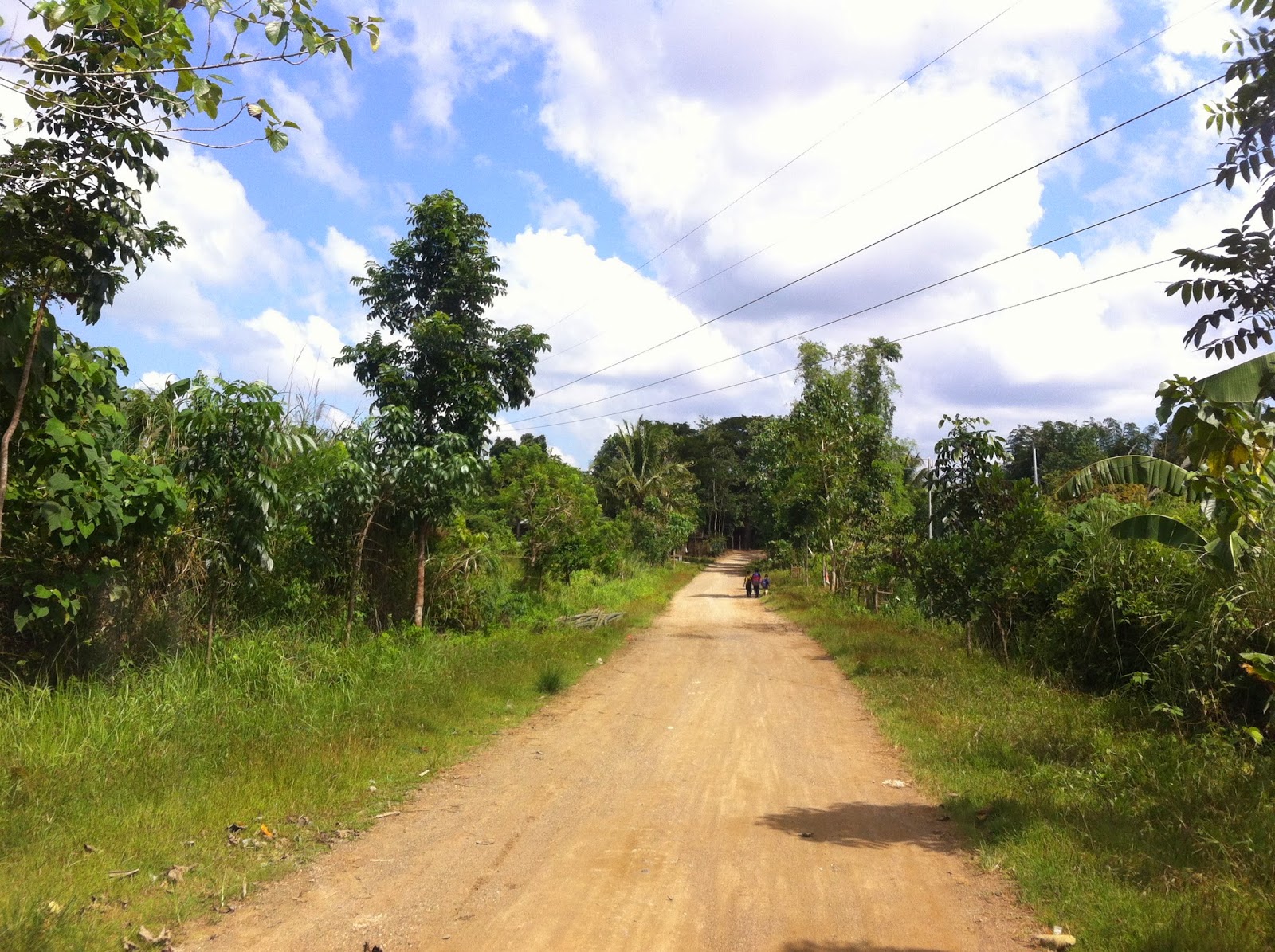
Dirt road to the barangay.

Aftermath of the sugarcane harvest.

Traveling in style with Manong Cleo.

Entrance to the Ati settlement.

Outside an Ati's house.

Drying the harvest.

Vaccination.

Snacks for the kids.

The communal "toilet."

Into the rice field! Enlarge the photo to see the white dots in the distance - the Ati farmers, one of whom was the healer I had to interview.  

Leaving.

 Reflections. 

My team: (Seated) Dr. Mondragon; (Standing, L-R) Nong Joey and Nang Barbara.

Saturday, July 12, 2014

The Extended Summer, Week 13 (The War)

I watched "Saving Private Ryan" for the first time the other night, and by the time the credits started rolling, I was already so distracted by how corny and embarrassingly derivative (given this is Steven Spielberg we're talking about) and patronizing to the audience in an America-is-the-best-place-in-the-world way the ending is, that I started thinking how the movie totally deserved to have lost Best Picture to "Shakespeare in Love" because "Shakespeare" was indeed an equally ambitious but miles more creative film than this war flick.   
  
I thought about the first and final shots of "Saving Private Ryan," with the American flag proudly waving before our faces, and I thought about how American directors - the whole of Hollywood, really - sometimes find the need to convert a film into their own private Fourth of July event. I thought about how this somehow helps (not necessarily that it's a direct cause) in promoting a culture of ignorance in American classrooms, especially in the subject of geography, when all these Stateside kids get to see and hear all day are America, America, America. Like in that classic movie "Mean Girls," where the character of Amanda Seyfried asks pre-rehab Lindsay Lohan, "If you're from Africa, why are you white?" and that random anecdote about many an American school kid not knowing where Guam is or, heaven forbid, even Hawaii. (But perhaps the reference to Mean Girl Karen may just be a bit unfair.)

And then I started thinking about Michael Cimino's "The Deer Hunter," the one where Robert De Niro and Christopher Walken go to Vietnam and get captured and play Russian roulette, and where Meryl Streep plays the long-suffering wife, and Walken goes cuckoo because of the madness he witnesses in Saigon and instead decides to be a Russian roulette prodigy. And I was reminded of the movie's length (three hours!) and that I watched it during that week when I almost got a cold but successfully suppressed the virus through a combination of vocal rest (imagine that!) and gallons of water, and how I had to pause "The Deer Hunter" every thirty minutes to drink a glass and pee some. And it brought me to the final scene of the movie, where Meryl Streep starts singing "God Bless America," and I realized how it could have been the only perfect ending at the time (the film came out in 1978) and the gamut of emotions that must have flooded every screening in every theater back then.

And I thought to evaluate more carefully the merits of "Shakespeare" as a Best Picture winner, and decided that it's very much a "clean" film (and here, observe how I've shifted from using the populist term "movie" to "film"), meaning that the plot is carefully thought out, and the storytelling is neatly structured. From there, however, I realized how little I remember about my experience of watching it a few years back - mainly, Judi Dench's delightful, if rather literally mortifying, appearance as Elizabeth I, and all those excerpts from "performances" of The Bard's plays, and that mesmerizing final shot of a woman walking down a seemingly endless beach. And so I decided that I should probably stop comparing "Saving Private Ryan" with it until I get around to watching "Shakespeare" a second time, and that it was totally wrong and rash of me to have mentally condemned the former simply on the basis of an overtly manipulative ending.

And then I read Roger Ebert's review, and gee, did a lot change. For example, realizing that the first thirty minutes, depicting the initial stages of the invasion of Normandy, is truly one of the most gripping and skillfully made battle sequences of all time, and that this section alone is justification enough for the critical acclaim the film had earned. Also, that if we just get hold of the reel and cut off the opening and closing scenes, "Saving Private Ryan" is really a magnificent, magnificent film (see what i did there). But most of all, that my frustration over the character of the cartographer/translator/believer of goodness and the rational/battle virgin Upham (Jeremy Davies) in that part during the culminating fight sequence where he ends up cowering on the stairs with a string of unused bullets the length of a reticulated python, could only be, to echo Ebert, my subconscious way of relating to the character.

And so I imagined how I'd fare in war as a civilian abruptly thrown in the thick of action, how I'd face the endless barrage of bullets, how I'd gun down the enemy or if I'd even get around to doing it, how I'd trek across towns reduced to rubble in my muddied, bloodied uniform. And I remembered how my paternal grandfather, long before he became a chain-smoking alcoholic, but also a great and humble man, as many in our city remember him, was supposed to have been a guerrilla messenger or something during the Japanese invasion. And that next week will be his 15th death anniversary.

This city is vicious. It has sucked the writer in me dry.

Thursday, June 26, 2014

The Extended Summer, Week 10 1/2 (Dreams)


My sister, speaking with the conviction of a pre-med know-it-all: "I have tennis elbow." She's referring, of course, to her sore forearm after a night of badminton.

*     *     *     *     *

Dream No. 1: It was an Orthopedics/Rehab Medicine practicals, and we were to manipulate this machine for muscle strength testing or something, and all I could remember was carpal tunnel syndrome. My examiner was Jeff Goldblum (no shit), and because I'm such a klutz, the machine ended up boring a non-bleeding pit into my snuffbox.

Dream No. 2: Inspired by "Game of Thrones," featuring the Unsullied, with elements from "The Sound of Music" and World War II. There was an evil "Unsullied" army approaching my kingdom in the desert; a secret underground passage and me taking the sword of one of my soldiers; hide and seek in a church that's connected to another church (or maybe it was an abbey); and a couple of taxis who refused to take me, and a third one who warned me that "going to town" was an exercise in futility because the Japanese were about to invade us. 

I'm pretty sure Jeff Goldblum was my mind's version of the principal from "The Breakfast Club," and the church race was lifted from "Of Gods and Men."

*     *     *     *     *

James Gray's "The Immigrant" is the first great movie with a 2014 release. An argument may be made for Wes Anderson's "The Grand Budapest Hotel," but not here. Some may find "The Immigrant" hard to watch, but such uncompromising brutality is a rarity onscreen nowadays. This is the story of a woman (played by the divine Marion Cotillard) who's in the deepest throes of desperation, and about the two men (Joaquin Phoenix and Jeremy Renner) who seek to insert themselves in her life. It has the year's best final shot, and also the second Oscar nomination-worthy performance (after Ralph Fiennes at his funniest in "Budapest Hotel"). 

*     *     *     *     *

This will be one of the most exciting weekends for Mother. Saturday, she'll be a principal sponsor at a wedding; Sunday, she'll be guiding the bride-to-be down the aisle (it's how they do it in Beijing) at an engagement party. She can barely wait, though she tries her best to remain collected. 

Wednesday, June 11, 2014

The Extended Summer, Week 8 (C&C in Iloilo)

It's been quiet in here for some time, thanks to the chaotic intrusion of one Carmel Vistal, Duchess of the Borough of Hillsborough, Muntinlupa City, and her squire Charles Patrick Uy (a.k.a. He Who Purportedly Listens to Genetics E-books To Fall Asleep) into our unassuming jungle-city lives. As tempting as it is to just whip up a Facebook album and stuff all the photos in there-- Who am I kidding? My Facebook is dead. 

CARMEL & CHARLES IN ILOILO
June 2-6, 2014

DAY 1

I gave the obligatory out-of-town churches tour because everybody knows Carmel is a closeted nun. Our first stop was the Sto. Tomas de Villanueva Church in the municipality of Miag-ao, some 40km southwest of Iloilo City. It is one of four baroque churches in the country designated by UNESCO as a World Heritage site. (The official designation is - guess what? - "Baroque Churches of the Philippines.") 


Miag-ao is also home to one of four UP Visayas campuses. This one has it owns beach.


Our third stop was the Church of St. John of Sahagun in Tigbauan, about 16km southwest of Iloilo City. Tile mosaics, the biggest of which lords over the sanctuary, adorn the interiors.


DAY 2

This was Bacolod day. Our mission was to show our allegedly profligate neighbors across the sea that an alliance still exists between us, despite Carmel's unpublicized recent trip to the delivery room. (She gave birth to a pair of fire-breathing iguanas and declared, "When my children are grown, we will take back what was stolen from me and destroy those who wronged me!") The other version of our mission goes like this: We went to Bacolod to eat, though I have no photos to prove it. 

This is The Ruins (of the Don Mariano Lacson Mansion in Talisay City, which is actually right next to Bacolod). Trivia: The funny tour guide here was featured in an episode of "Gandang Gabi, Vice!" 


"I'm wishing for the one I love to find me today." ---Snow White


Meet Francis. He is Pia's five-year-old nephew. I gave him a 25-centavo coin and told him to get atop that rock, look intently at the coin, and say, "My Precious!" Hey Peter Jackson, I've found the next Andy Serkis.


San Sebastian Cathedral, the seat of the Roman Catholic diocese of the city.


The gazebo at the Bacolod Public Plaza is inhabited by alien fish that swim in a sort of Area 51-ish pattern and frequented by lovers as young as five. When Francis the young traveling knight felt he was done with the maiden in the photo and took off for the nearby swings where a gaggle of lovely ladies were combing their hair and putting on lipstick, I whispered to the distraught child, "Today, you learn to fight for your man!"


Later that day, Pia practiced her mommy skills. She is getting married before the year ends, after all. Or so the rumor goes.


DAY 3

We went to Guimaras Island with a bottle of Merlot, among other important stuff, in hand. This is Ortiz Wharf near Santa Maria Parish where the family hears mass. The regular fare for a one-way trip via pump boat is P14.


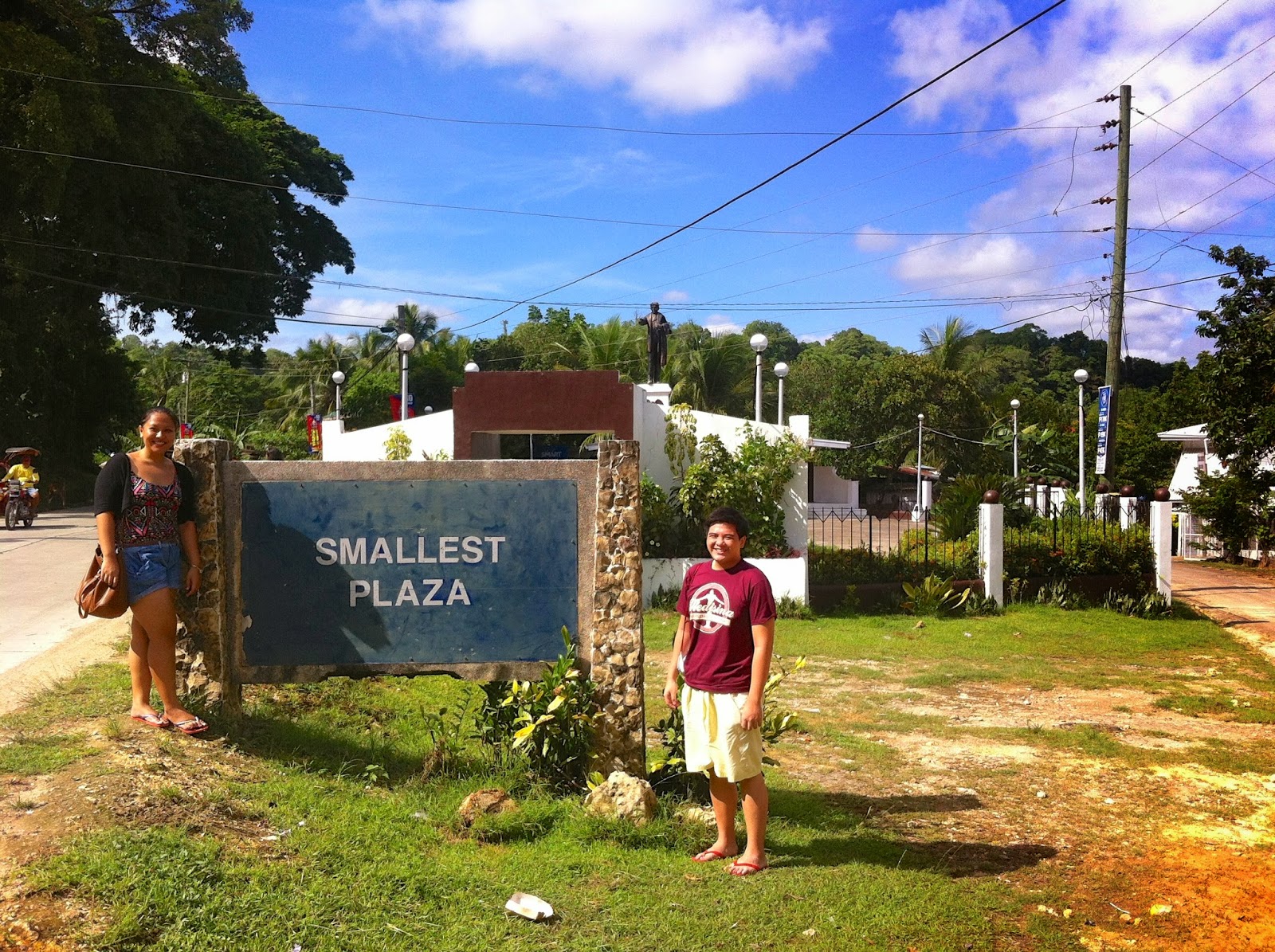
Guimaras is an island-province. The provincial capital is Jordan, which is not pronounced the same way as the basketball star. It claims to have the world's smallest plaza.


This is the Trappist Monastery in Guimaras. Pine trees thrive in the place, which should say something about its elevation. Also, we saw a monk from afar. CHALLENGE: Enlarge the lower-right picture, and tell me what you see. Clue: I was so thankful I did not touch the scallop shell.


Our main destination in Guimaras was Magic Island Resort, near the southern tip of the island. It is a little more than an hour by tricycle from the Jordan Wharf, not counting the 4km rough road leading to this settlement of boats nestled in the midst of a mangrove forest. Magic Island has its own motorized flat boats to transport its clients.


I mean, come on, these are mangroves!


The truth is that Magic Island is just one of roughly 49 islets scattered in the area. The approach to the resort is simply breathtaking. (Coron, anyone?)


Magic Island is still a work in progress. The caretaker told us they don't always have guests every day, but there are always guests every week.


We were one of only two groups of good friends sharing one wonderful one short day spending that Wednesday night in the resort.


The Magic Island overnight package includes three full meals and two snacks. Upon arrival, we were treated to a plate of biscuits and fresh buko juice.


This is the view from our balcony. (It is a common balcony, accessible to all six seaside rooms, but still.) Some time in the afternoon, I grabbed a chair, put my feet up on the ledge, and read Monica Ali's "Brick Lane" to an enchanting symphony of wind and water.


"What does that island look like?" the caretaker asked. "A duck!" I immediately answered. "That is what we call Swan Island," he said. And I was like, omgmcdbfmns I just couldn't.


Now here's the secret of Magic Island: Come evening, when low tide is the word, that expanse of water in the next two photos transform into what looks like the Hundred Islands of Sand (y'know, like the Hundred Islands in Pangasinan). It is this nightly juxtaposition of tide pools and sand islets that is the real magic of the place.


Lunch: Sweet-chili shrimps, fresh crabs, and sinigang na lapu-lapu, with Guimaras mangoes for dessert.


That afternoon, Carmel showed us what is known in her beloved high school Woodrose as the "Day-off" pose. It took us lowly creatures quite some time to decipher what she was getting at.


The ceiling of our balcony was home to this beautiful spider.


Mid-afternoon, we went island-hopping. (It was more like island-seeing, really, because we only did step foot on one island.) Also, I got stung by jellyfish, and it hurt like a bullshit (and here, I'm quoting Violet Weston).


Right across Magic Island is Mama Mary Island, obviously because it has a giant statue of the Virgin Mary. To get to the statue, you actually have to do minor-league wilderness trekking, and so to alleviate the pain from the jellyfish sting, I started singing "Let It Be" even though I knew an apparition of John Lennon was 98% impossible.


Sunset by the beach, or how Charles' fascination with crab holes made for an amusing sight. The first photo clearly shows a dark curve on the bottom half; that was the edge of the shore in the morning.


Dinner: Lechon kawali, sweet and sour lapu-lapu, and tinola na Bisayang manok, with Guimaras mangoes for dessert.


After dinner, it was biology time! Under the influence of a laboriously opened bottle of Merlot, we conquered the tide pools and played with starfish (I made a starfish pancake pile!), funny-looking crabs, trapped jellyfish (hurray!), sea centipedes, and sea snails. To borrow from Woody Allen, it was magic in the moonlight.


DAY 4

Breakfast: chorizo and fried eggs. From our balcony, we could see this big-ass orange starfish.


Then, it was rowing time. They weren't really kayaks, nor were they canoes, so I'll settle with rowing time. The funny start to rowing time was C&C's boat sinking because it actually had holes or something.


Behold, the morning-after look of my jellyfish sting.


Rowing time was the best part of this trip for me. We got to see some cool rock formations up close, scan the water for huge-ass orange starfish, put the physics behind two-person rowing to use, unintentionally hit some mangroves, and take badass selfies. And yes, my lips can get unnaturally red at times.


Then, it was time to leave. This was our double-twin-bed accommodation. There are presently six such rooms in the resort.


The last part of our Guimaras adventure was climbing Mt. Balaan, locally called Balaan Bukid, but one does not really go there to climb. During Holy Week, specifically Good Friday, people flock to this 170m mountain either in simple pilgrimage or to do the Way of the Cross - because yes, the stations are scattered throughout the trail to the peak, where a small chapel and a huge cross that's visible throughout Iloilo City await. And of course, a vista of Iloilo.


From the peak, I spied a clearing and a cow.


Obligatory turista photos.


It was time to cross the strait. These are scenes at the Jordan Wharf.


DAY 5

C&C's last day in Iloilo was a jam-packed city tour with yours truly as the great driver. Among the destinations were Jaro Cathedral, the seat of the Archdiocese of Jaro. The church is dedicated to Our Lady of Candles and is one of the few in the country to have a belfry (photographed) separate from the main church building.  


After lunch at Breakthrough Restaurant, we dropped by the Sinamay House, where we saw this badass weaving machine and a chess set donated by Ian McKellen himself. 


We dropped by the reconstructed Fort San Pedro, next to the Iloilo Domestic Port. The place was built in the early 17th century to protect from invaders from the sea, but nowadays, it serves as the vacation home of Mrs. Lovett.


A stone's throw away from our house (in Molo district) is the Church of St. Anne, bastion of Catholic feminists because of its all-female-saint lineup (in contrast to Jaro's all-male roster). 


Meanwhile, in Molo Plaza, they've erected this fairly inaccurate ode to Grecian paganism. Star of the photo below is supposed to be Athena, but everybody knows the Olympians were overweight.


Finally, the day ended with a sunset walk along the new Carpenter's Bridge and the Iloilo River Esplanade. The old city abattoir is now riddled with hippy vandalism. The mountains signifying the border between Iloilo and Antique provinces finally appeared after days of cloudy skies. And C&C undoubtedly returned to Imperialist Manila a few pounds heavier, because that is the truth.